A Dark Elf Captain is more than a simple leader. It is, in the Artaxil Coven, a special religious leader that brings members of the community together in order that they may explore the magical nature of the world around them together, and to bond and protect the enclave. They are individuals of renown and high reputation, and are often trusted with important missions and placed in charge of enclave installations and outposts.
Captain of Dark Elves
Num Appearing: 1
Alignment: chaotic evil
Movement: 120' on the ground
Armor Class: 3
Hit Dice: 8hd (56hp)
Attacks: 2 weapon attacks, or 2 light crossbow shots
Damage: Per magic weapon
Save: F8
Morale: 9
Treasure: Carry approximately 1000gp each in jewelry and coins. Worn conspicuously. Often in position of magic items (rings, scrolls, potions).
Special: Sorcerous compounds; magic weapons; spell use.
Dark Elf Captains will always have on hand 3-5 (1d3+2) different of the Sorcerous Compounds that the Dark Elf Scouts carry.
Dark Elf Captains typically carry magic weapons made of the same
metal as that of Dark Elf Warriors. The typical weapon is a spear, which has a
+2 to hit, and a +2 damage. Their training and specialization allow
two attacks per round with such a weapon. In addition to any speed
benefit these weapons would normally get (if using a weapon initiative
system in your game - which I do), consider them to get an additional +2
speed bonus. If not using such a system, then the Captain will
strike first in any round, unless a 6 is rolled on 1d6. If the Dark Elf Captain wishes to shoot, then the light crossbow will do 1d6+1 damage,
and the special construction enables 2 shots per round. In addition. the bolts of the crossbow will be poisoned (save vs. poison, or paralyzed 1d4 rounds).
Dark Elf Captains have the following spell use available to them: The following spells at will - Hold Portal, Shocking Grasp, and Feather Fall. And the following spells 3x per day - Web, Blur, Fly, Monster Summoning 1.
The Captain can mindspeak with his Warriors and Scouts assigned to him, removing the requirement for them to speak to each other in order to coordinate in combat. In addition to their Monster Summoning spell ability, the Dark Elf Captains of Artaxil Coven will frequently (50%) have a Stone Spider on call within 2-8 rounds (2d4), if they are encountered underground. Finally, once per day, they can pass between the normal world, into the Unseely Realms. A portal or other method of doing this is not required. For all purposes the Captain is gone, unless his pursuers can also pass (at will) into the Unseely Realms. Then he may be followed.
Showing posts with label elves. Show all posts
Showing posts with label elves. Show all posts
Jul 17, 2012
Dark Elf Warriors in and near Werms
There are several dark elf communities near Werms, however the group described here are a splinter group from the group dwelling in the caves that open up from the eastern edge of the Cambio Delve, approximately 200' down below the surface.
That group, self named the Artaxil Coven,are known for being tamers and riders of a huge species of giant bat. Some of the group were caught during a raid on Eindar Pillar, (a specific raid, not just random harassment). The hid their bats in the old Aery, but they were captured by the goblins and fed to the wyverns. The party retreated into the deep ruins, where they encountered Ostigaar. Both (the Dark Elf party, and the arachnoid monstrosity) recognized each other as a likely partner in a proper relationship, and the Elfs decided to stay.
Note that these renegades from the Artaxil Coven are meaner and more dangerous than their raiding cousins detailed in the "Staff of St. Varina" encounter.
There are three different types of Dark Elf detailed here, Warriors, Scouts and Captains. While male pronouns may dominate this article, Dark Elf society is generally gender balanced, where possible.
Warrior Dark Elf
That group, self named the Artaxil Coven,are known for being tamers and riders of a huge species of giant bat. Some of the group were caught during a raid on Eindar Pillar, (a specific raid, not just random harassment). The hid their bats in the old Aery, but they were captured by the goblins and fed to the wyverns. The party retreated into the deep ruins, where they encountered Ostigaar. Both (the Dark Elf party, and the arachnoid monstrosity) recognized each other as a likely partner in a proper relationship, and the Elfs decided to stay.
Note that these renegades from the Artaxil Coven are meaner and more dangerous than their raiding cousins detailed in the "Staff of St. Varina" encounter.
There are three different types of Dark Elf detailed here, Warriors, Scouts and Captains. While male pronouns may dominate this article, Dark Elf society is generally gender balanced, where possible.
Warrior Dark Elf
Num Appearing: 2d6
Alignment: chaotic evil
Movement: 120' on the ground/30' on vertical surfaces
Armor Class: 3
Hit Dice: 5hd (30hp)
Attacks:2 weapon attacks, or 2 light crossbow shots
Damage: Per magic weapon (+2)
Save:F6
Morale:9
Treasure:Various magic items (scaling irons, magic weapons), often 1 or more potions in a group, and approximately 200gp worth of jewelry per warrior, as badges of rank, awards, etc. These are worn proudly by Warriors.
Specials: Climb walls and ceilings (see scaling irons below); spell use (see below); magic weapons.Alignment: chaotic evil
Movement: 120' on the ground/30' on vertical surfaces
Armor Class: 3
Hit Dice: 5hd (30hp)
Attacks:2 weapon attacks, or 2 light crossbow shots
Damage: Per magic weapon (+2)
Save:F6
Morale:9
Treasure:Various magic items (scaling irons, magic weapons), often 1 or more potions in a group, and approximately 200gp worth of jewelry per warrior, as badges of rank, awards, etc. These are worn proudly by Warriors.
The dark elf warriors from the Artaxil community that are serving Ostigaar have access to some very interesting magic items. The first of these are scaling irons. These are made of a curious magical metal from deep within the pillar that Artaxil warriors know about. Similar to certain Drow magic items. the Unseely Realms teaches some magic that is intended to function only underground. This is an example of such magic - if the scaling irons (which are fitted to boots and around hands) are exposed to sunlight, the magic in them fades immediately. While working, and while worn, however, they allow the wearer to scramble up and along any stone surface, at a rate of 30' per round. It only takes one limb to hold oneself to the surface (foot or hand), and the other limbs are perfectly usable, in combat, without penalty. Artaxil warriors are trained in spell use.
Dark Elf Warriors can cast the following spells, each 3x per day - Hold Portal, Shocking Grasp, and Feather Fall. And the following spells 1x per day - Web, Blur.
Dark Elf Warriors typically carry magic weapons made of the same metal as their scaling irons. The typical weapon is a spear, which has a +2 to hit, and a +2 damage. Their training and specialization allow two attacks per round with such a weapon. In addition to any speed benefit these weapons would normally get (if using a weapon initiative system in your game - which I do), consider them to get an additional +2 speed bonus. If not using such a system, then these Warriors will strike first in any round, unless a 6 is rolled on 1d6. If the Dark Elf warrior wishes to shoot, then the light crossbow will do 1d6+1 damage, and the special construction enables 2 shots per round.
Warriors are the typical Dark Elf encounter, so if these are used as part of a random encounter anywhere near a Dark Elf enclave (such as Artaxil Coven), then roll up how many Warriors appear before consulting anything else.
Next posting, Dark Elf Scouts.
Jun 28, 2012
Khomaes Barony (2)
The current head of the Barony of Khomaes is Aldra Ap Iaggio. The Iaggio family has ruled the Barony for 8 generations now, stretching back almost 200 years. Although the family, as with most of the significant families, is only interested in politics and the situation in the city of Khomaes (simply called "The City" within the Barony, but sometimes derisively referred to as the Drop or the Rift, because of Dancer's Rift. It is also common for poets to refer to it as the Spire or the Spike, for Dancer's Spike).
The population of the city is approximately 22,000, but it has been a while since a general census has been called for. The local economy, which is based primarily on local agriculture for the lower classes, and on a combination of industrial trade (amberstone and other materials coming down out of the Aghanz Hills), trade with the nearby Baronies, and the pilgrim and traveler trade. The pilgrims and travelers have ample reason to come to The City, and hence the City itself flourishes, and creates additional demand on the surrounding areas, affecting the whole Barony. The pilgrims coming are for the two cathedrals in the city, and also for the School of Charm. The cathedrals are Appuco Fast, and it's twin Ramee Tower. Appuco Fast is dedicated to St. Norena. Ramee Tower is dedicated to the followers of St. Ellain. Both churches draw a large amount of pilgrim traffic, and the business that pilgrims draw, to the Barony.
Westron is spoken commonly in this Barony, as with most of the Baronies. But because it is so far north, there is also a wide understanding of Destrikking. All written transactions, however, use Westschrift.
The surrounding towns are (see the map):
A. Truend - Pop 2,200 - Walled against the large mammals of the Darkearth Plains, and also against the Shagmen out of the Aghanz Hills. A small elite corps of the town guard are called the Truend Rangers, and they travel the local area, looking for traveling groups of Shagmen, and breaking them up before they can get too close to Truend, or local farm villages.
B. Khoben Vale - Population 1,800 - There is a small section of dense trees that grows on either side of a minor river called Bruuka Wash. Carved out of that is enough space for Khoben Vale, all within the trees, and partially on a rocky island in the middle of Bruuka Wash, the rest on either bank. There are sturdy stone bridges connecting the whole affair, and stone walls and towers inside the forest, to protect the town. Outside the little forest, there are single and small groups of trees, all of which attract the giant lynx common to the area. In fact, sometimes the lynx is called the Khoben Cat.
C. Sagio Mill - Population 2,800 - This is an open town, without a city wall. There are, however, several concentric rings of watch towers extending out, 20 miles in all directions around the town. Most of the farms, and other holdings, relying on the town, are within that set of rings. The town gets it's name from a very large stone mill, built next to a rather impressive mill pond. There is no river feeding this pond, but the water in it constantly rotates (due to magic means), providing motion for the very large grinding wheel.
D. Iffel - Population 2,200 - This is a town built around a small castle (D'Mosh Castle), with a curtain wall around the core town. It is, however, built right next to the King's Highway. The curtain wall of the town backs up to and connects with the mound of the King's Highway, and within the walls of the town, there is a curious large tower, that has in it's central area, four very, very large platforms (like rafts, made of large logs lashed together), big enough for a large wagon and team. Each of these platforms are actually elevators, up to a stone connecting ramp over to the King's Highway. The elevators are powered by partially trained Mammoths, captured from the wilds of the Darkearth Plains. This access to the King's Highway means that Iffel is quite wealthy as a trade location. There is a similar elevator tower - obviously built by the Old Ones - on the south side of the King's Highway at this same point, but nobody bothers to maintain or man it.
E. Cyclot - Population 2,400 - This town has a massive wooden great hall at the center of it, lots of professional buildings (mostly of a half timber variety), and massive palisade walls made of very large shaped logs driven into the earth. There are two concentric walls, one only 2 miles across, in a rough oval, only 1 mile across the narrow axis. The second concentric wall is all of five miles across, roughly circular. Inside the first wall is the "inner town" - which is for the wealthiest families, and prestigious buildings. The second wall contains the "outer town" which are most of the minor nobility, lesser professionals, and more important land owners, who own grazing and planting estates outside the town. Outside the walls exists a small community of Elves, mostly Wood Elves (about 400), but a few traveling Gray Elves are always present, also. The residents of Cyclot, and the Elves, refer to this community as Duar Village. These Wood Elves have strong ties to the Harp Woods. Much of the industry in the town is either from the surrounding forest products (charcoal burning, and carpentry rate very highly), but also a very strong wool market is present. The sheep, a curious three horned variety, called the Odelle Sheep, produces very valuable wool. The flocks that graze in open pasture outside the city are protected by shepherds. Cyclot shepherds are known to be very competent, and dangerous, mostly due to the high number of dire wolves in the area.
F. Nowak - Population 2,200 - Another woodland related town, this one with a nearby Gnome community, of about 600 Gnomes, mostly underground. The community is called Cheddom Tower, but the tower is a minor part of the underground Gnome village. Together, the carpenters and craftsmen of Nowak and the Gnomes of Cheddom build some of the most intricate, and fabulous working artifacts (such as cuckoo clocks). There is a strong tradition of hunting amongst the wealthy and young from Nowak, in the Harp Woods.
G. Acron Trade - Population 2,400 - This is another walled town, built around a core of a castle (Bekno Keep), and surrounded by stone palisade walls. It is built next to the King's Highway, and the Old Ones had constructed a curious platform settlement right next to the mound. The platform is large enough for multiple buildings, and serves as a location for the main market of Acron Trade. Approaches to the platform were built with a very long, shallowly sloping ramp up, so that animal and walking traffic have no trouble climbing it. Stairs have been constructed, that are much steeper, but provide quicker access up out of the walled town of Acron Trade. There is not a similar platform, nor an access ramp, on the south side of the King's Highway. Although there is a thriving agricultural community of farms and villages surrounding Acron Trade, it is from trade that it makes its economy.
Note, this is part two of a two part article on the Barony of Khomaes. Part 1 is located here.
The population of the city is approximately 22,000, but it has been a while since a general census has been called for. The local economy, which is based primarily on local agriculture for the lower classes, and on a combination of industrial trade (amberstone and other materials coming down out of the Aghanz Hills), trade with the nearby Baronies, and the pilgrim and traveler trade. The pilgrims and travelers have ample reason to come to The City, and hence the City itself flourishes, and creates additional demand on the surrounding areas, affecting the whole Barony. The pilgrims coming are for the two cathedrals in the city, and also for the School of Charm. The cathedrals are Appuco Fast, and it's twin Ramee Tower. Appuco Fast is dedicated to St. Norena. Ramee Tower is dedicated to the followers of St. Ellain. Both churches draw a large amount of pilgrim traffic, and the business that pilgrims draw, to the Barony.
Westron is spoken commonly in this Barony, as with most of the Baronies. But because it is so far north, there is also a wide understanding of Destrikking. All written transactions, however, use Westschrift.
The surrounding towns are (see the map):
A. Truend - Pop 2,200 - Walled against the large mammals of the Darkearth Plains, and also against the Shagmen out of the Aghanz Hills. A small elite corps of the town guard are called the Truend Rangers, and they travel the local area, looking for traveling groups of Shagmen, and breaking them up before they can get too close to Truend, or local farm villages.
B. Khoben Vale - Population 1,800 - There is a small section of dense trees that grows on either side of a minor river called Bruuka Wash. Carved out of that is enough space for Khoben Vale, all within the trees, and partially on a rocky island in the middle of Bruuka Wash, the rest on either bank. There are sturdy stone bridges connecting the whole affair, and stone walls and towers inside the forest, to protect the town. Outside the little forest, there are single and small groups of trees, all of which attract the giant lynx common to the area. In fact, sometimes the lynx is called the Khoben Cat.
C. Sagio Mill - Population 2,800 - This is an open town, without a city wall. There are, however, several concentric rings of watch towers extending out, 20 miles in all directions around the town. Most of the farms, and other holdings, relying on the town, are within that set of rings. The town gets it's name from a very large stone mill, built next to a rather impressive mill pond. There is no river feeding this pond, but the water in it constantly rotates (due to magic means), providing motion for the very large grinding wheel.
D. Iffel - Population 2,200 - This is a town built around a small castle (D'Mosh Castle), with a curtain wall around the core town. It is, however, built right next to the King's Highway. The curtain wall of the town backs up to and connects with the mound of the King's Highway, and within the walls of the town, there is a curious large tower, that has in it's central area, four very, very large platforms (like rafts, made of large logs lashed together), big enough for a large wagon and team. Each of these platforms are actually elevators, up to a stone connecting ramp over to the King's Highway. The elevators are powered by partially trained Mammoths, captured from the wilds of the Darkearth Plains. This access to the King's Highway means that Iffel is quite wealthy as a trade location. There is a similar elevator tower - obviously built by the Old Ones - on the south side of the King's Highway at this same point, but nobody bothers to maintain or man it.
E. Cyclot - Population 2,400 - This town has a massive wooden great hall at the center of it, lots of professional buildings (mostly of a half timber variety), and massive palisade walls made of very large shaped logs driven into the earth. There are two concentric walls, one only 2 miles across, in a rough oval, only 1 mile across the narrow axis. The second concentric wall is all of five miles across, roughly circular. Inside the first wall is the "inner town" - which is for the wealthiest families, and prestigious buildings. The second wall contains the "outer town" which are most of the minor nobility, lesser professionals, and more important land owners, who own grazing and planting estates outside the town. Outside the walls exists a small community of Elves, mostly Wood Elves (about 400), but a few traveling Gray Elves are always present, also. The residents of Cyclot, and the Elves, refer to this community as Duar Village. These Wood Elves have strong ties to the Harp Woods. Much of the industry in the town is either from the surrounding forest products (charcoal burning, and carpentry rate very highly), but also a very strong wool market is present. The sheep, a curious three horned variety, called the Odelle Sheep, produces very valuable wool. The flocks that graze in open pasture outside the city are protected by shepherds. Cyclot shepherds are known to be very competent, and dangerous, mostly due to the high number of dire wolves in the area.
F. Nowak - Population 2,200 - Another woodland related town, this one with a nearby Gnome community, of about 600 Gnomes, mostly underground. The community is called Cheddom Tower, but the tower is a minor part of the underground Gnome village. Together, the carpenters and craftsmen of Nowak and the Gnomes of Cheddom build some of the most intricate, and fabulous working artifacts (such as cuckoo clocks). There is a strong tradition of hunting amongst the wealthy and young from Nowak, in the Harp Woods.
G. Acron Trade - Population 2,400 - This is another walled town, built around a core of a castle (Bekno Keep), and surrounded by stone palisade walls. It is built next to the King's Highway, and the Old Ones had constructed a curious platform settlement right next to the mound. The platform is large enough for multiple buildings, and serves as a location for the main market of Acron Trade. Approaches to the platform were built with a very long, shallowly sloping ramp up, so that animal and walking traffic have no trouble climbing it. Stairs have been constructed, that are much steeper, but provide quicker access up out of the walled town of Acron Trade. There is not a similar platform, nor an access ramp, on the south side of the King's Highway. Although there is a thriving agricultural community of farms and villages surrounding Acron Trade, it is from trade that it makes its economy.
Note, this is part two of a two part article on the Barony of Khomaes. Part 1 is located here.
Jan 12, 2011
The Order of Saint Kelvin
 St. Kelvin was a priest of Magenta who, in the late 6th century, made the proclamation that knowledge and strength can come from the magic in the sun, as well as the magic that Magenta's daughters had in the three moons.
At the time this was very unpopular, because of the early attempts at city building south of the Great River, and the clashes that the migrating population had there when dealing with the Sun King tribes. However, St. Kelvin (who at the time, was only Padre Kelvin of Kennidor) perfected a limited system of prophetic seeing based on the magic of the sun, and also researched a great deal of magic having to do with light. Soon, this began to win over the opinion of peoples, who also understood the diabolical nature of Photoss and the relationship he had with the Sun King Tribes.
Before his death in 603, Padre Kelvin oversaw the building of the first Temple of Light, southwest of the Barony of Ungems, along the edge of the Nell Nod Forest. This was a marvelous structure, and Kelvin and his followers were aided by the Wood Elves of the Nell Nod, who helped them with the earliest construction of crystalline architecture. The Temple still stands, and an academic/religious town has grown up around it, as the center of what would later become the Order of St. Kelvin. It is a lovely temple, built of white marble, but with the upper walls and portions of the domed ceiling made of crystals, so that the light shines in and splits into a hundred different dancing colors.
Priests in the order are split into two groups - the Light Holders (who stay at the many temples built in the wilderness by the order, across the valley), and the Light Bringers. The Light Holder Temples are known as great spots of healing, peace, and prophecy. The Light Bringer Stations are located throughout the valley on roads where there are no taverns or other resting areas. They are left as open shelters, but often will have one or more traveling members of the clergy or lay members of the order.
The Order wears light blue colored tunics (over either skirts or pants, usually of white or tan, but not proscribed by the order), with a golden sun on the chest, and seven rays coming out in all directions. Light Bringers wear a crystal on a necklace around their neck, and Light Holders wear a gold rimmed round glass around their neck.
Spells available to the order are from the spheres of All, Charm, Divination, Healing, Sun; they also have minor access to the spheres of Animal, Creation, Necromantic, Plant.
The order frequently welcomes Elves and Half Elves into its clergy.
The abilities taught to priests of the order include:
- The ability to see as if with Infravision (out to 60'). Elves in the order have their Infravision improved to 120'.
- The priests may Turn Undead.
- Laying on hands, healing 2 points per level, per day.
- Charm/Fascination - 1 time per day, works as the wizard spell Suggestion, but not usable in combat.
- Prophecy - 1 time per day, requires a 10 minute trance of meditation/concentration, and then 1 question may be asked of the DM.
- Light Holders may cast the "Light" spell 1x per day for free, in addition to other spells.
- Light Bringers receive a +1 to hit with ranged weapons, if used outdoors during daylight.
 Light Bringers may wear non-metal armor. Light Holders wear no armor. Neither branch uses shields.
Both types of priests may employ the Dagger, Dart and Spear. In addition, Light Bringers may also employ the Javelin, Crossbows, Bows, Knife and Sling.
Jan 6, 2011
Modern Languages
Many characters in a game will have access to multiple languages, and I think it is only fair to enumerate them for the setting.
Far and away, the most common language for Humans (and those dwelling with them) in the Valley is Westron. This language is a modern variant of the original language spoken by the Human settlers who came into the Valley from the west. The language has changed over the past 1500 years quite a bit, and when written word and documents are encountered written in the original form, it is referred to as Old Westron (generally not understandable by speakers of the modern language - like old english, there may be a few word similarities, but no fluency could be expected). There is a written form that is very similar to our roman letters, called Westschrift.
Destrikking - This is the language of the Storm King tribes, although it is frequently called the "Northern Tongue". The written form is in runes called the Ainark Runes. Following a storyline of something written in Ainark would be difficult, but it is perfectly suited for recording spells and also associating great deeds with the names of heroes.
Holab - This is the language of the tribes of the Sun King, in its basic form. There are two very different dialects, which we will call Eastern Holab, and Western Holab. Details on the Sun King tribes will be coming soon, but for now just remember that those speaking Eastern Holab want to kill you and remove your organs for sacrifice. Those peaking Western Holab want to kill you and eat strips of your flesh in order to capture your magic. Clearly a travelogue, with lots of cheerful drawings and translation of common phrases would increase tourism in the area. While both languages are mutually exclusive in spoken form, they share the same written language, which is very simple and not capable of conveying any nuance. Sun King tribal wizards and shamans will usually employ some complex method of recording magical spells that involves complex knotted strings with hollowed out stones of different colors on the mesh the strings form.
Elves have a traveling language that they employ exclusively (when not speaking a Human tongue) while in the Valley, at least Wood Elves and High Elves. They call it Eldarin and it differs from the language of Faery that they speak while in the Seelie Realms. In an effort to mark their departure from Seelie culture entirely, the Gray Elves have their own tongue, which is completely different, it is called Elanarif. Both of these have their own written form. It is considered highly heretical for an Elf to use the language of the Seelie Realm on this side of their portals.
The Dark Elves have their own language, as well, called Mortiggo it incorporates some languages of Goblyn (see below), and any words it has for surface geographical features (such as Tree, Mountain, Grass, etc) come from Eldarin. The Dark Elves have a complex runic written form, called Mortine Runes.
The Dwarves have a language of their own, which they call Ardspeke. It is written as Ardrunes. Gnomes have a different spoken language, known as Kurakka Kurad, but it borrows the Dwarven runes for its written form.
The Goblyn races (Orcs, Goblins, Trolls, Ogres, Hobgoblins, etc) each have their own racial tongue, although there is a simple lingua franca used amongst them that is simply called Goblyn Speech, or sometimes referred to as the Black Tongue. It exists in a very crude runic form, called Goblyn Runes.
Forest Folk usually will speak Westron, as will Halflings.
Giants will speak a confused mashup of Westron and Goblyn Speech, except for Frost Giants, which speak the Northern tongue exclusively.
Dragons do not speak modern languages.
The Saurian Races (Lizard Men, Kobolds, Yuan Ti, Turtle Folk, etc.) speak a language called Saurial (it is difficult for mammalian mouths to pronounce). Their written language is mostly a simple script of horizontal and vertical scratches. Much of their knowledge (as it is) is transmitted by unspoken low frequency sounds, and the same is true for spell casters of this race. They will record spells by committing the instructional form of them to memory as a simple song played on a drum or flute, and accompanied by what sounds like a guttural humming or moaning. This is repeated when a saurian spell caster needs to re-memorize a spell, or teach it to another.
Far and away, the most common language for Humans (and those dwelling with them) in the Valley is Westron. This language is a modern variant of the original language spoken by the Human settlers who came into the Valley from the west. The language has changed over the past 1500 years quite a bit, and when written word and documents are encountered written in the original form, it is referred to as Old Westron (generally not understandable by speakers of the modern language - like old english, there may be a few word similarities, but no fluency could be expected). There is a written form that is very similar to our roman letters, called Westschrift.
Destrikking - This is the language of the Storm King tribes, although it is frequently called the "Northern Tongue". The written form is in runes called the Ainark Runes. Following a storyline of something written in Ainark would be difficult, but it is perfectly suited for recording spells and also associating great deeds with the names of heroes.
Holab - This is the language of the tribes of the Sun King, in its basic form. There are two very different dialects, which we will call Eastern Holab, and Western Holab. Details on the Sun King tribes will be coming soon, but for now just remember that those speaking Eastern Holab want to kill you and remove your organs for sacrifice. Those peaking Western Holab want to kill you and eat strips of your flesh in order to capture your magic. Clearly a travelogue, with lots of cheerful drawings and translation of common phrases would increase tourism in the area. While both languages are mutually exclusive in spoken form, they share the same written language, which is very simple and not capable of conveying any nuance. Sun King tribal wizards and shamans will usually employ some complex method of recording magical spells that involves complex knotted strings with hollowed out stones of different colors on the mesh the strings form.
Elves have a traveling language that they employ exclusively (when not speaking a Human tongue) while in the Valley, at least Wood Elves and High Elves. They call it Eldarin and it differs from the language of Faery that they speak while in the Seelie Realms. In an effort to mark their departure from Seelie culture entirely, the Gray Elves have their own tongue, which is completely different, it is called Elanarif. Both of these have their own written form. It is considered highly heretical for an Elf to use the language of the Seelie Realm on this side of their portals.
The Dark Elves have their own language, as well, called Mortiggo it incorporates some languages of Goblyn (see below), and any words it has for surface geographical features (such as Tree, Mountain, Grass, etc) come from Eldarin. The Dark Elves have a complex runic written form, called Mortine Runes.
The Dwarves have a language of their own, which they call Ardspeke. It is written as Ardrunes. Gnomes have a different spoken language, known as Kurakka Kurad, but it borrows the Dwarven runes for its written form.
The Goblyn races (Orcs, Goblins, Trolls, Ogres, Hobgoblins, etc) each have their own racial tongue, although there is a simple lingua franca used amongst them that is simply called Goblyn Speech, or sometimes referred to as the Black Tongue. It exists in a very crude runic form, called Goblyn Runes.
Forest Folk usually will speak Westron, as will Halflings.
Giants will speak a confused mashup of Westron and Goblyn Speech, except for Frost Giants, which speak the Northern tongue exclusively.
Dragons do not speak modern languages.
The Saurian Races (Lizard Men, Kobolds, Yuan Ti, Turtle Folk, etc.) speak a language called Saurial (it is difficult for mammalian mouths to pronounce). Their written language is mostly a simple script of horizontal and vertical scratches. Much of their knowledge (as it is) is transmitted by unspoken low frequency sounds, and the same is true for spell casters of this race. They will record spells by committing the instructional form of them to memory as a simple song played on a drum or flute, and accompanied by what sounds like a guttural humming or moaning. This is repeated when a saurian spell caster needs to re-memorize a spell, or teach it to another.
Jan 3, 2011
The Faery and the Goblyn
Two broad groups of intelligent species dwell in the Valley that predate both the Older Ones, and of course, the younger races that dwell there now. These are the Faery and the Goblyn.
The Faery include all of the normal magical races one would associate with that group - leprechauns, pixies, fairies, etc - but also the arboreal magical races - such as nymphs, dryads, nyads, centaurs, fauns, and elves.
The Faery do not have gods or goddesses, as such, but rather have a number of very powerful beings who rule over the Seely court. These are King Oberon and Queen Titania, among others. The Seely Court is removed from this world, and exists in the Seely Realms. How or when this split from the World took place, none now alive know. It is possible that Oberon or Titania know, but they do not speak of it.
The most human like of the Faery are of course the Elves. They dwell almost entirely in their forest realms, which are areas around where portals from the Seely Realms intersect easily with the world of the Valley. As expected, time and distance in the Seely realms are very different from time and distance as measured between portals in the world of the Valley. Because of this situation - that the Elves congregate around the Faery portals - it is rare that Elves in any number are seen outside of their own Fey glens and hollows.
Humans who encounter Elves often mistake the leading figures of the Seely Court as elven "deities". This is not exactly true, but it is common enough for humans to believe so. There are Elves who venerate the members of the Court in such a way, that they behave as Priests while in the world of the Valley, receiving powers and spells from the realm of Faery due to their loyalty and fealty to the Court.
When the Seely Realms were separated from those of the World, at the same time the Unseely Realms were also formed. These were populated by the Goblyn races, mostly. Those consist of the goblins, hobgoblins, orcs, ogres, trolls and other affiliated races. The magics of the Unseely Realms are not nearly as well formed nor as well behaved as the magics of the Seely. Because of this, it is much less likely that travel back and forth against the Unseely portals takes place. Unlike the Faery, the Goblyn portals are almost all underground, some are very deep underground. A number of powerful dark magic beings rule over the Unseely Realms, and these are sometimes venerated by the Goblyn races as their own "deities". This is much less likely than with the Fey folk.
Two interesting outliers from this situation are notable. The first are the Dark Elves. These are a group of elves that, for unknown reasons, have chosen to ally themselves with the Unseely Realms. They dwell mostly underground, and are consummately evil. They are the most powerful, magically, of the Unseely folk, rivaling some Faery folk for power.
The second exception are the very mysterious Gray Elves. There are, roughly, three distinct groups of Faery Elves (apart from the Goblyn Dark Elves). The first two - the High Elves (who dwell mostly in the Seely Realms, but visit the world of the Valley from time to time) and the Wood Elves (who are more likely to remain in the Valley for some time, but always remain in the forests near the portals where they can remain in contact with the Seely Court) never remain forever in our world. They travel back to the Seely Realm (some more or less frequently than others, but none remain here forever), and look to the Court for their guidance and allegiance.
The Gray Elves, on the other hand, are of the Faery sort, but they have decided to come to our world and dwell her permanently. They often take up residence in parts of the world far from the forests, usually because they cannot bear the sadness that results from their decision not to return to the Seely Realms. They Gray Elves often speak in enigmatic riddles when discussing the world, and why they dwell apart from other Elves. It is possible that they may know about the reason for the split of the Seely and the Unseely from the world of the Valley.
One curious feature of the separation of the Goblyn and Faery from the world, there are occasionally babies born to both Elves and Orcs (the races closest to humans) that resemble a human being close enough to be mistaken for one at a glance. There are mischevious members of both the Seely and Unseely realms who will bring such babies to Human communities and exchange them for human babies. In both cases (the elf or orc child raised by humans, or the human child raised by elves or orcs) the results are referred to as Half Elves or Half Orcs. Once their true origin is known, neither are ever fully trusted by Humans. It is not known how the human counterparts are treated in the Faery or Goblyn realms.
The Faery include all of the normal magical races one would associate with that group - leprechauns, pixies, fairies, etc - but also the arboreal magical races - such as nymphs, dryads, nyads, centaurs, fauns, and elves.
The Faery do not have gods or goddesses, as such, but rather have a number of very powerful beings who rule over the Seely court. These are King Oberon and Queen Titania, among others. The Seely Court is removed from this world, and exists in the Seely Realms. How or when this split from the World took place, none now alive know. It is possible that Oberon or Titania know, but they do not speak of it.
The most human like of the Faery are of course the Elves. They dwell almost entirely in their forest realms, which are areas around where portals from the Seely Realms intersect easily with the world of the Valley. As expected, time and distance in the Seely realms are very different from time and distance as measured between portals in the world of the Valley. Because of this situation - that the Elves congregate around the Faery portals - it is rare that Elves in any number are seen outside of their own Fey glens and hollows.
Humans who encounter Elves often mistake the leading figures of the Seely Court as elven "deities". This is not exactly true, but it is common enough for humans to believe so. There are Elves who venerate the members of the Court in such a way, that they behave as Priests while in the world of the Valley, receiving powers and spells from the realm of Faery due to their loyalty and fealty to the Court.
When the Seely Realms were separated from those of the World, at the same time the Unseely Realms were also formed. These were populated by the Goblyn races, mostly. Those consist of the goblins, hobgoblins, orcs, ogres, trolls and other affiliated races. The magics of the Unseely Realms are not nearly as well formed nor as well behaved as the magics of the Seely. Because of this, it is much less likely that travel back and forth against the Unseely portals takes place. Unlike the Faery, the Goblyn portals are almost all underground, some are very deep underground. A number of powerful dark magic beings rule over the Unseely Realms, and these are sometimes venerated by the Goblyn races as their own "deities". This is much less likely than with the Fey folk.
Two interesting outliers from this situation are notable. The first are the Dark Elves. These are a group of elves that, for unknown reasons, have chosen to ally themselves with the Unseely Realms. They dwell mostly underground, and are consummately evil. They are the most powerful, magically, of the Unseely folk, rivaling some Faery folk for power.
The second exception are the very mysterious Gray Elves. There are, roughly, three distinct groups of Faery Elves (apart from the Goblyn Dark Elves). The first two - the High Elves (who dwell mostly in the Seely Realms, but visit the world of the Valley from time to time) and the Wood Elves (who are more likely to remain in the Valley for some time, but always remain in the forests near the portals where they can remain in contact with the Seely Court) never remain forever in our world. They travel back to the Seely Realm (some more or less frequently than others, but none remain here forever), and look to the Court for their guidance and allegiance.
The Gray Elves, on the other hand, are of the Faery sort, but they have decided to come to our world and dwell her permanently. They often take up residence in parts of the world far from the forests, usually because they cannot bear the sadness that results from their decision not to return to the Seely Realms. They Gray Elves often speak in enigmatic riddles when discussing the world, and why they dwell apart from other Elves. It is possible that they may know about the reason for the split of the Seely and the Unseely from the world of the Valley.
One curious feature of the separation of the Goblyn and Faery from the world, there are occasionally babies born to both Elves and Orcs (the races closest to humans) that resemble a human being close enough to be mistaken for one at a glance. There are mischevious members of both the Seely and Unseely realms who will bring such babies to Human communities and exchange them for human babies. In both cases (the elf or orc child raised by humans, or the human child raised by elves or orcs) the results are referred to as Half Elves or Half Orcs. Once their true origin is known, neither are ever fully trusted by Humans. It is not known how the human counterparts are treated in the Faery or Goblyn realms.
Jan 2, 2011
Gorrem - City of the Ten Gates
The namesake, and chief, city at the heart of the Barony of Gorrem is also called the City of the Ten Gates. It has a population of 27,000. There are a number of towns that are reliant on it - these are the chief population centers of the Barony, along with each having its own supporting network of villages and farm country.
Much of the Barony is forested, and in addition to the many human towns listed above, there are a large number of "forest folk" in the wooded areas of the demesne. To the west (in the Redsmoke Woods) there are a large number of Hedgehog People. To the east, in the Plum Woods and the Belley Woods, there are a number of Mouseling communities. Also in the region between Belley and Plum is the Green Apple Commonwealth - a small Halfling county that owes fealty to the Barony of Gorrem. In the forests in the northern reaches of the Barony, along the Great River, there are numerous forest settlements of Wolflings.
The Barony is not home to many Dwarves or Gnomes. And the few Elven settlements that exist are deep within the forested regions of the demesne.
The current ruling family is the Household of Terrasund, with Baroness Catherine II on the throne.
The city is home to the Homehall Cathedral - maintained by a community of clerics and monastics of the order of St. Ermo. The Tower Druaqua (Bardic College of Maelwyn) is there. Also within the walls of the city can be found Castle Tattelis - home of the Terrasund family. Not really of political concern, but of possible interest to adventurers and explorers - the abandoned tower of Ordobrandt is also within the city, but it is guarded by city guard.
Within the walled fields surrounding the city, there is the keep and practice grounds of the Knights of the Malmen Rose. The Knights are a chivalric (but not Paladin) order that has a loose alliance with Gorrem, but have a distinct arrangement where they do not have Feudal duty, but are rather allies.
The Ten Gates, as well as much of the city, are protected by the city watch, known as Gorrem Levy. They are much more than a levy, however, as they are a regular full time soldiery. Typical equipment includes ring mail, simple helmet, bardiche, and short sword. The Gorrem Levy are (total) approximately 2000 strong, however only 800 are serving at any one time. There are several towers both on the outer walls and located along the inner walls where these are housed.
In addition to the sites and locations already mentioned, the city is somewhat known for its Inns and Taverns, each of which boasts its own ales and beers. There are competitive wars between the larger Taverns, each claiming to be the "Best in Gorrem" or "The Baroness' Favorite".

- Colvine (population 4,500) to the north
- Harwych (population 6,000) to the east
- Sallow (population 6,500) to the southeast
- Haventown (population 5,000) to the south
- Lightcastle (population 5,500) to the west
- Aldbridge (population 4,000) to the northwest
Much of the Barony is forested, and in addition to the many human towns listed above, there are a large number of "forest folk" in the wooded areas of the demesne. To the west (in the Redsmoke Woods) there are a large number of Hedgehog People. To the east, in the Plum Woods and the Belley Woods, there are a number of Mouseling communities. Also in the region between Belley and Plum is the Green Apple Commonwealth - a small Halfling county that owes fealty to the Barony of Gorrem. In the forests in the northern reaches of the Barony, along the Great River, there are numerous forest settlements of Wolflings.
The Barony is not home to many Dwarves or Gnomes. And the few Elven settlements that exist are deep within the forested regions of the demesne.
The current ruling family is the Household of Terrasund, with Baroness Catherine II on the throne.
The city is home to the Homehall Cathedral - maintained by a community of clerics and monastics of the order of St. Ermo. The Tower Druaqua (Bardic College of Maelwyn) is there. Also within the walls of the city can be found Castle Tattelis - home of the Terrasund family. Not really of political concern, but of possible interest to adventurers and explorers - the abandoned tower of Ordobrandt is also within the city, but it is guarded by city guard.
Within the walled fields surrounding the city, there is the keep and practice grounds of the Knights of the Malmen Rose. The Knights are a chivalric (but not Paladin) order that has a loose alliance with Gorrem, but have a distinct arrangement where they do not have Feudal duty, but are rather allies.
The Ten Gates, as well as much of the city, are protected by the city watch, known as Gorrem Levy. They are much more than a levy, however, as they are a regular full time soldiery. Typical equipment includes ring mail, simple helmet, bardiche, and short sword. The Gorrem Levy are (total) approximately 2000 strong, however only 800 are serving at any one time. There are several towers both on the outer walls and located along the inner walls where these are housed.
In addition to the sites and locations already mentioned, the city is somewhat known for its Inns and Taverns, each of which boasts its own ales and beers. There are competitive wars between the larger Taverns, each claiming to be the "Best in Gorrem" or "The Baroness' Favorite".

Dec 5, 2010
Week of Encounters Day 7: The Staff of St. Varina
[This is the last of the Valley of the Old Ones Week of Encounter Seven encounter challenge. It took me a bit longer than a week to complete (almost two) because of holiday travel, work and school and family. However, It think this rounds out things nicely, with a small after-adventure mini dungeon that can lead to big things. A great way to introduce the next leg in a campaign, sandbox or otherwise. Thanks for reading. For giggles, I am planning on going back and adding illustrations to all the encounters. I plan to use them in an upcoming campaign.]
This adventure takes place in the Enchanted Forest region, on the western shores of the Lost Mare river.
The player characters (in the area west of Lost Mare river) are on the road to a local town tavern, for some much needed rest after an adventure, when they are approached by a young acolyte of St. Varina. This young girl is in training to become a Priestess of the order, she explains, but was recently out tracking the source of some complaints made by the lord of a local manor. His manor is at the edge of some very marshy wetlands (Arriot Bottom), which is perfect for him because he has many peasants working Arriot vines for their berries (he makes a sort of wine out of it, and sells it for a handsome profit).
 Lately, one after another, a number of harvesting parties who have gone out into the swampy waters to harvest the berries have gone missing. The few survivors have complained about lizard men. The young acolyte decided to travel out on her own to protect the serfs, but she secreted away the relic from her order's abbey.
The staff of St. Varina is a marvelous magical item, imbued with fantastic effects of channeling St. Varina's blessing on a spell caster of the order, in addition to granting several combat bonuses (it gives +2AC, +1damage vs. evil creatures, and will grant one additional spell per day of levels 1, 2 and 3 when the spell caster is capable of casting spells of that level). More important than its abilities is the value of the staff as an artifact and as a token of pride for the local Abbot and his following.
To shorten things up, it turns out that the young priest DID encounter a raiding band of Lizardmen (she remembers the exact location, and can lead the characters there if they desire), and in the attack she was knocked out and the staff was stolen.
If the players decide to investigate, they too will be attacked by a band of marauding Lizard Men.
 Lizard Man of Arriot Bottom
Num Appearing: 2-16
Alignment: Chaotic evil
Movement: 60'
Armor Class: 5
Hit Dice: 2d (10 h.p.)
Attacks: 1 (weapon)
Damage: As weapon (plus 1)
Save: F2
Morale: 9
Special: Can swim 120' also these Lizard Men differ from normals in that they are small, fast and quite intelligent. They receive a -2 initiative modifier.
The lizard men will attack the group for a while (roll for their numbers, but as a minimum there should be at least 1 per party member), but if they start to lose, they will withdraw back towards their lair.
The lair is actually a dungeon underneath one of the large tree islands in the marsh. There is a large opening under one of the larger swamp trees, and it leads down to a series of rooms full of lizard men (as the DM sees fit). As mentioned these lizard men are quite ingenious and clever compared to most of their sort. The tunnels and chambers would be full of not only a handful in each chamber of weapon wielding lizard men (by the way, this clan favors a sort of battle axe, but some use a broad sword, and a few carry shields that improves their AC by one), but often with traps and sometimes with "pets" such as giant swamp lizards or worse.
 Giant Swamp Lizard
Num Appearing: 1-4 (or trained as riding or attack animals)
Alignment: Chaotic evil
Movement: 90'
Armor Class: 4
Hit Dice: 4d (20 h.p.)
Attacks: 1 vicious bite (plus infectious drool)
Damage: 2-12
Save: F4
Morale: 9
Special: Infectious drool can corrupt and infect a victims bloodstream. If a successful attack is made for the first time against a victim, then that victim must make a saving through vs. paralysis to see if it is susceptible to the infectious drool. If the save is failed, then the victim will fall over, stiff and paralyzed for 1d4 rounds. Note that if the victim lands in water (the swamp lizard is often around water), it will start drowning. A "wild" swamp lizard will then begin to start eating the victim (chewing for an additional 2-12 points of damage a round). A "trained" swamp lizard will move to another victim. They are really quite stupid, and can often be duped with large amounts of carrion.
Finally, the last room in the lizard man lair is reached, and it is guarded by a lizard man chieftain (4hd) with a two handed sword and a breastplate giving him AC 3. This room is quite a change from the rest of the lair - it still has the horrible lizard smell of the rest of the lair, but the floor here is metal grating. Underneath, the huge sound of a rushing waterfall can be heard. The metal grating is completely overgrown with very slimy wet moss and algae, making it quite slippery. Each round, a combatant with shoes on will have to make a dexterity check or fall down.
The chieftain is not alone. He has a trained swamp lizard in this large room with him, as well as 6 lizard man body guards (with shields, broadswords, and also throwing darts). Finally, the room is a very tall chamber, and the chieftain keeps his 3 hunting pterodactyls in here with him. The 'dactyls are fearsome as well as unusual (especially since they swoop out of the 40' high ceiling, with almost complete surprise the first round). This particular species can give an ear splitting war cry 1x per three rounds. Every mammal within 40' must make a save vs. being stunned, or be stunned for one round.
 Shrieking Pterodactyl
Num Appearing: 2d4 (as a trained hunting flock)
Alignment: neutral
Movement: Fly 180'
Armor Class: 6
Hit Dice: 1d (5 h.p.)
Attacks: 1 bite
Damage: 1d3+1
Save: F1
Morale: 7
Special: Ear splitting shried - 1x per three rounds. All mammals within 40' must save vs. stun or be stunned for 1 round.
If the lizard man chieftain is defeated (along with his bodyguards and his pet pterodactyls) then the loot behind his throne area can be searched.
Loot of the Lizard Man Chieftain
The staff of St. Varina is indeed there, and it is unharmed.
There is also a stash of 1000 gp in a sealed clay jar. If the seal is broken, a 20' cloud of gas erupts that (unless a save vs. poison is made) will subtract 1d6 dexterity points for 1d4 weeks. The victim is also prone to the occasional shakes.
Finally, there is a very special magical spear. It is a +1/+1 spear but it also has the ability to detect elves (of any sort, good or evil) within 40 feet.
As the players are examining the loot, the spear begins glowing a sickly purple.
Suddenly a group of dark elves come up a path in the cliff wall deep below the stone grating floor, and they spring an ambush by suddenly crashing open the floor - crashing all within down into the waterfall. All must make a dexterity check (-2 to dex for this one) although characters who are good swimmers or divers can add +2 instead of subtracting -2. If the save is made the character pulls to shore at the top of the waterfall (near where the dark elves are standing), else they plummet to the bottom of the waterfall is - some 30' below where the dark elves are. There is a narrow goat path from the bottom up to the top.
 Dark Elf Raiding Party
Num Appearing: 2-8
Alignment: Chaotic evil
Movement: 120'
Armor Class: 4
Hit Dice: 1d+1 (6 h.p.)
Attacks: 1 (weapon)
Damage: As weapon (plus 1)
Save: MU2
Morale: 9
Special: These dark elves are quite exceptional. In addition to have a giant lizard for every two dark elves (same stats as the ones listed above with the lizard men), these are a long range patrol of warriors, and as such they each have a pouch of specially prepared healing mushrooms, 1 dose per dark elf, which for any elf or half elf acts as a potion of healing. For weapons they carry long swords and also hunting crossbows (fire 1/turn) that do 1d4+1. The bolts of the hunting crossbows have corrosive acid tips, and unless a save vs. poison is made, the victim will take 1d3 points of damage per crossbow strike for each turn, total of 2 turns after the initial shot. These elves carry flasks of oil and will gleefully use them in combat, however one must pause to light a small bunch of tinder with a flint and steel before they can ignite the oil.
(fantastic dark elf and lizard beast drawing from http://fantasyartfolio.blogspot.com/2009/02/how-to-draw-manticore.html)
The dark elves have come up the path, leading from an opening to a vast underground network of tunnels eventually leading to a dark elf city. The group encountered is somewhat weak, being solely fighters with no spell casting ability amongst them, however future encounters will likely check to see if combat is likely before sending out a band of simple warriors without a magic user or shaman.
It should be pointed out that the entire area - the cliff top, the goat path, and the cliff bottom is covered in the same slimy stuff as the grating above was covered in.
If the players choose to search under the waterfall, there is a chamber there full of loot - the DM should prepare rewards (or roll randomly) as he/she desires.
This adventure takes place in the Enchanted Forest region, on the western shores of the Lost Mare river.
The player characters (in the area west of Lost Mare river) are on the road to a local town tavern, for some much needed rest after an adventure, when they are approached by a young acolyte of St. Varina. This young girl is in training to become a Priestess of the order, she explains, but was recently out tracking the source of some complaints made by the lord of a local manor. His manor is at the edge of some very marshy wetlands (Arriot Bottom), which is perfect for him because he has many peasants working Arriot vines for their berries (he makes a sort of wine out of it, and sells it for a handsome profit).
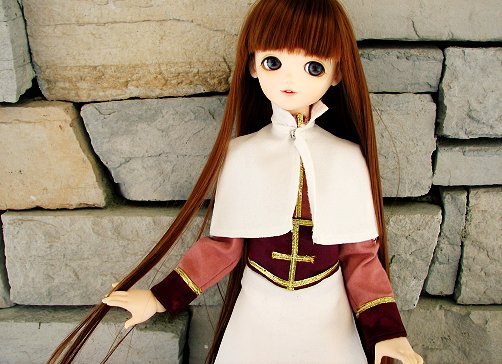 Lately, one after another, a number of harvesting parties who have gone out into the swampy waters to harvest the berries have gone missing. The few survivors have complained about lizard men. The young acolyte decided to travel out on her own to protect the serfs, but she secreted away the relic from her order's abbey.
 The staff of St. Varina is a marvelous magical item, imbued with fantastic effects of channeling St. Varina's blessing on a spell caster of the order, in addition to granting several combat bonuses (it gives +2AC, +1damage vs. evil creatures, and will grant one additional spell per day of levels 1, 2 and 3 when the spell caster is capable of casting spells of that level). More important than its abilities is the value of the staff as an artifact and as a token of pride for the local Abbot and his following.
To shorten things up, it turns out that the young priest DID encounter a raiding band of Lizardmen (she remembers the exact location, and can lead the characters there if they desire), and in the attack she was knocked out and the staff was stolen.
If the players decide to investigate, they too will be attacked by a band of marauding Lizard Men.
 Lizard Man of Arriot Bottom
Num Appearing: 2-16
Alignment: Chaotic evil
Movement: 60'
Armor Class: 5
Hit Dice: 2d (10 h.p.)
Attacks: 1 (weapon)
Damage: As weapon (plus 1)
Save: F2
Morale: 9
Special: Can swim 120' also these Lizard Men differ from normals in that they are small, fast and quite intelligent. They receive a -2 initiative modifier.
The lizard men will attack the group for a while (roll for their numbers, but as a minimum there should be at least 1 per party member), but if they start to lose, they will withdraw back towards their lair.
The lair is actually a dungeon underneath one of the large tree islands in the marsh. There is a large opening under one of the larger swamp trees, and it leads down to a series of rooms full of lizard men (as the DM sees fit). As mentioned these lizard men are quite ingenious and clever compared to most of their sort. The tunnels and chambers would be full of not only a handful in each chamber of weapon wielding lizard men (by the way, this clan favors a sort of battle axe, but some use a broad sword, and a few carry shields that improves their AC by one), but often with traps and sometimes with "pets" such as giant swamp lizards or worse.
 Giant Swamp Lizard
Num Appearing: 1-4 (or trained as riding or attack animals)
Alignment: Chaotic evil
Movement: 90'
Armor Class: 4
Hit Dice: 4d (20 h.p.)
Attacks: 1 vicious bite (plus infectious drool)
Damage: 2-12
Save: F4
Morale: 9
Special: Infectious drool can corrupt and infect a victims bloodstream. If a successful attack is made for the first time against a victim, then that victim must make a saving through vs. paralysis to see if it is susceptible to the infectious drool. If the save is failed, then the victim will fall over, stiff and paralyzed for 1d4 rounds. Note that if the victim lands in water (the swamp lizard is often around water), it will start drowning. A "wild" swamp lizard will then begin to start eating the victim (chewing for an additional 2-12 points of damage a round). A "trained" swamp lizard will move to another victim. They are really quite stupid, and can often be duped with large amounts of carrion.
Finally, the last room in the lizard man lair is reached, and it is guarded by a lizard man chieftain (4hd) with a two handed sword and a breastplate giving him AC 3. This room is quite a change from the rest of the lair - it still has the horrible lizard smell of the rest of the lair, but the floor here is metal grating. Underneath, the huge sound of a rushing waterfall can be heard. The metal grating is completely overgrown with very slimy wet moss and algae, making it quite slippery. Each round, a combatant with shoes on will have to make a dexterity check or fall down.
The chieftain is not alone. He has a trained swamp lizard in this large room with him, as well as 6 lizard man body guards (with shields, broadswords, and also throwing darts). Finally, the room is a very tall chamber, and the chieftain keeps his 3 hunting pterodactyls in here with him. The 'dactyls are fearsome as well as unusual (especially since they swoop out of the 40' high ceiling, with almost complete surprise the first round). This particular species can give an ear splitting war cry 1x per three rounds. Every mammal within 40' must make a save vs. being stunned, or be stunned for one round.

Num Appearing: 2d4 (as a trained hunting flock)
Alignment: neutral
Movement: Fly 180'
Armor Class: 6
Hit Dice: 1d (5 h.p.)
Attacks: 1 bite
Damage: 1d3+1
Save: F1
Morale: 7
Special: Ear splitting shried - 1x per three rounds. All mammals within 40' must save vs. stun or be stunned for 1 round.
If the lizard man chieftain is defeated (along with his bodyguards and his pet pterodactyls) then the loot behind his throne area can be searched.
Loot of the Lizard Man Chieftain
The staff of St. Varina is indeed there, and it is unharmed.
There is also a stash of 1000 gp in a sealed clay jar. If the seal is broken, a 20' cloud of gas erupts that (unless a save vs. poison is made) will subtract 1d6 dexterity points for 1d4 weeks. The victim is also prone to the occasional shakes.
Finally, there is a very special magical spear. It is a +1/+1 spear but it also has the ability to detect elves (of any sort, good or evil) within 40 feet.
As the players are examining the loot, the spear begins glowing a sickly purple.
Suddenly a group of dark elves come up a path in the cliff wall deep below the stone grating floor, and they spring an ambush by suddenly crashing open the floor - crashing all within down into the waterfall. All must make a dexterity check (-2 to dex for this one) although characters who are good swimmers or divers can add +2 instead of subtracting -2. If the save is made the character pulls to shore at the top of the waterfall (near where the dark elves are standing), else they plummet to the bottom of the waterfall is - some 30' below where the dark elves are. There is a narrow goat path from the bottom up to the top.
Dark Elf Raiding PartyNum Appearing: 2-8
Alignment: Chaotic evil
Movement: 120'
Armor Class: 4
Hit Dice: 1d+1 (6 h.p.)
Attacks: 1 (weapon)
Damage: As weapon (plus 1)
Save: MU2
Morale: 9
Special: These dark elves are quite exceptional. In addition to have a giant lizard for every two dark elves (same stats as the ones listed above with the lizard men), these are a long range patrol of warriors, and as such they each have a pouch of specially prepared healing mushrooms, 1 dose per dark elf, which for any elf or half elf acts as a potion of healing. For weapons they carry long swords and also hunting crossbows (fire 1/turn) that do 1d4+1. The bolts of the hunting crossbows have corrosive acid tips, and unless a save vs. poison is made, the victim will take 1d3 points of damage per crossbow strike for each turn, total of 2 turns after the initial shot. These elves carry flasks of oil and will gleefully use them in combat, however one must pause to light a small bunch of tinder with a flint and steel before they can ignite the oil.
(fantastic dark elf and lizard beast drawing from http://fantasyartfolio.blogspot.com/2009/02/how-to-draw-manticore.html)
The dark elves have come up the path, leading from an opening to a vast underground network of tunnels eventually leading to a dark elf city. The group encountered is somewhat weak, being solely fighters with no spell casting ability amongst them, however future encounters will likely check to see if combat is likely before sending out a band of simple warriors without a magic user or shaman.
It should be pointed out that the entire area - the cliff top, the goat path, and the cliff bottom is covered in the same slimy stuff as the grating above was covered in.
If the players choose to search under the waterfall, there is a chamber there full of loot - the DM should prepare rewards (or roll randomly) as he/she desires.
Nov 25, 2010
Week of Encounters Day 3: Captain Lu d'Ross and Caerilla Ne Quolda
This encounter takes place in the Wychwood region of the Valley, just to the west of the Tiazarr River. it deals with the Khozaki - a "nation" of Fethta riding nomads from the vast plains around the Barony of Ungams.
The players come across an encamped Khozaki mercenary company near the Tiazarr River, along it's eastern bank. These particular mercenaries are in the employ of Baron Ungams and have been sent to cross the Tiazarr, enter the realm of Gorrem Castle, test to see if a new baron has been selected yet, and scout if there is a chance for advantage to be made by a full scale crossing of the river.
These Khozaki mercenaries are 3rd level human fighting men, and are all experts with the spear and the short bow. In the common manner of the Khozaki, they wear loose brightly colored pants, leather shirts, and short capes of a variety of colors. High hard leather riding boots and bronze helmets complete their outfit. In combat, they would wear scale armor over their leather shirts. Again, as common for all Khozaki, they are excellent riders. This company are riding the common riding animal from Ungams, the Fethta. The Fethta is a great riding lizard, the girth and bulk of a horse, but much longer counting the spiky tail. The drool and spittle of the Fethta is poisonous, and they are trained to fight as well as ride. When angered, and in combat, they will rear up on their hind legs (a maneuver that the riders train for, and their special harnesses and saddles are built to support it), and fight with their two front claws and by biting. The riders will employ their spears, and also shoot their bows. In appearance, the fethta looks like a common green garden lizard, but with a 7' long body, and an additional 7' long spiky tail. The spikes on the tail are merely mating adornments, and not for fighting.
Fethta
Num Appearing: 1-2 (if encountered in the wild)
Alignment: neutral
Movement: 90'
Armor Class: 5
Hit Dice: 3d (15h.p.)
Attacks: 3 (claw, claw, bite) plus disease
Damage: 1d4; 1d4; 2d4
Save: F2
Morale:9
The bite of the Fethta is indeed dangerous. If a successful bite is made, and a save vs. poison is failed, then there is a 25% chance of infection. If this happens, a blood disease ensues - if infected, the victim will lose one point (from each) of strength, constitution and dexterity for 9 days, and then gain it back at one point each for 9 days; if any go below 0 the victim dies. A cure disease will end this.
This company of mercenaries is a small river crossing party, perhaps 20 fighters strong, being led by a 5th level fighting man named Captain Lu d'Ross. They are encamped near the rivers edge in order to construct rafts for crossing the river with their riding fethta.
In order to speed up the process, Captain Lu d'Ross has ordered the company to chop down the nearby Quolda trees. These are semi-magical trees cultivated by the Elves, and have been growing since the birth of the Elven people. Well into the chopping of the second tree (only three or four would be needed, because of the fantastic properties and quantities of wood that can be harvested from each one), an Elven princess from the nearby woodland realm came to Captain Lu d'Ross, begging for the men to stop the process of killing the sacred trees. Captain d'Ross immediately ordered that the princess, a Caerilla Ne Quolda, be taken prisoner so that the wood harvesting could continue.
Encounter: As the players are looking on to the scene of the harvesting of the Quolda trees, they are ambushed and attacked by a group of wood elves who are intent on stopping the harvest, and have mistaken the player characters as part of the mercenary company. The warband of wood elves consists of a 4th level leader Turokan Har Quolda, and six 3rd level elves. All are fighter/magic-users.
Experienced Wood Elf Warriors
No. Enc.: 1d4
Alignment: Neutral
Movement: 120'
Armor Class: 5
Hit Dice: 3 (18 h.p.)
Attacks: 1 (long sword, and long bow)
Damage: 1d8 or 1d6
Save: MU3
Morale: 8
Spells: Magic Missile, Shield, Levitate
If possible, half of the group will cast Levitate on themselves, floating up out of reach, and will employ long bows. The rest will immediately cast Shield, and then engage in combat. If the chance comes up, they will use Magic Missile against spell casters.
Details for Captain Lu d'Ross, Caerilla Ne Quolda, and Turokan Har Quolda are left for the DM to devise.
The players must decide whether they will fight the elves, or try to parlay with them. Then the noise generated will ensure an attack by the Mercenaries.
During the combat, if one occurs, the second quolda tree will be felled (it is almost down when the ambush comes), and inside its massive trunk, a chamber leading to an underground Wood Elf burrow is revealed. Within are treasures and dangers awaiting the Characters - no doubt which will be determined by their decisions during the encounter between the Elves and the Mercenaries - and how they treat with the imprisoned Princess.
The players come across an encamped Khozaki mercenary company near the Tiazarr River, along it's eastern bank. These particular mercenaries are in the employ of Baron Ungams and have been sent to cross the Tiazarr, enter the realm of Gorrem Castle, test to see if a new baron has been selected yet, and scout if there is a chance for advantage to be made by a full scale crossing of the river.
These Khozaki mercenaries are 3rd level human fighting men, and are all experts with the spear and the short bow. In the common manner of the Khozaki, they wear loose brightly colored pants, leather shirts, and short capes of a variety of colors. High hard leather riding boots and bronze helmets complete their outfit. In combat, they would wear scale armor over their leather shirts. Again, as common for all Khozaki, they are excellent riders. This company are riding the common riding animal from Ungams, the Fethta. The Fethta is a great riding lizard, the girth and bulk of a horse, but much longer counting the spiky tail. The drool and spittle of the Fethta is poisonous, and they are trained to fight as well as ride. When angered, and in combat, they will rear up on their hind legs (a maneuver that the riders train for, and their special harnesses and saddles are built to support it), and fight with their two front claws and by biting. The riders will employ their spears, and also shoot their bows. In appearance, the fethta looks like a common green garden lizard, but with a 7' long body, and an additional 7' long spiky tail. The spikes on the tail are merely mating adornments, and not for fighting.
Fethta
Num Appearing: 1-2 (if encountered in the wild)
Alignment: neutral
Movement: 90'
Armor Class: 5
Hit Dice: 3d (15h.p.)
Attacks: 3 (claw, claw, bite) plus disease
Damage: 1d4; 1d4; 2d4
Save: F2
Morale:9
The bite of the Fethta is indeed dangerous. If a successful bite is made, and a save vs. poison is failed, then there is a 25% chance of infection. If this happens, a blood disease ensues - if infected, the victim will lose one point (from each) of strength, constitution and dexterity for 9 days, and then gain it back at one point each for 9 days; if any go below 0 the victim dies. A cure disease will end this.
This company of mercenaries is a small river crossing party, perhaps 20 fighters strong, being led by a 5th level fighting man named Captain Lu d'Ross. They are encamped near the rivers edge in order to construct rafts for crossing the river with their riding fethta.
In order to speed up the process, Captain Lu d'Ross has ordered the company to chop down the nearby Quolda trees. These are semi-magical trees cultivated by the Elves, and have been growing since the birth of the Elven people. Well into the chopping of the second tree (only three or four would be needed, because of the fantastic properties and quantities of wood that can be harvested from each one), an Elven princess from the nearby woodland realm came to Captain Lu d'Ross, begging for the men to stop the process of killing the sacred trees. Captain d'Ross immediately ordered that the princess, a Caerilla Ne Quolda, be taken prisoner so that the wood harvesting could continue.
Encounter: As the players are looking on to the scene of the harvesting of the Quolda trees, they are ambushed and attacked by a group of wood elves who are intent on stopping the harvest, and have mistaken the player characters as part of the mercenary company. The warband of wood elves consists of a 4th level leader Turokan Har Quolda, and six 3rd level elves. All are fighter/magic-users.
Experienced Wood Elf Warriors
No. Enc.: 1d4
Alignment: Neutral
Movement: 120'
Armor Class: 5
Hit Dice: 3 (18 h.p.)
Attacks: 1 (long sword, and long bow)
Damage: 1d8 or 1d6
Save: MU3
Morale: 8
Spells: Magic Missile, Shield, Levitate
If possible, half of the group will cast Levitate on themselves, floating up out of reach, and will employ long bows. The rest will immediately cast Shield, and then engage in combat. If the chance comes up, they will use Magic Missile against spell casters.
Details for Captain Lu d'Ross, Caerilla Ne Quolda, and Turokan Har Quolda are left for the DM to devise.
The players must decide whether they will fight the elves, or try to parlay with them. Then the noise generated will ensure an attack by the Mercenaries.
During the combat, if one occurs, the second quolda tree will be felled (it is almost down when the ambush comes), and inside its massive trunk, a chamber leading to an underground Wood Elf burrow is revealed. Within are treasures and dangers awaiting the Characters - no doubt which will be determined by their decisions during the encounter between the Elves and the Mercenaries - and how they treat with the imprisoned Princess.
Nov 20, 2010
History of the Valley - since Ba'a Zarn
The Archivists of Parn Tandalorn tend to view the history of the Valley of the Old Ones as, enigmatically, beginning with the departure of the Old Ones themselves. At some point, in the distant past, the King of the Old Ones Ba'a Zarn disappeared from the world. After this time, the many creatures and creations of the gods of the Old Ones began to spread and to rule over the world. The chief creations amongst all of these are Men, Elves and Dwarves. The Men seem to have been a companion gift to the Old Ones, constructed by the Elemental Gods. The Elves were first created by the forest goddess Earnissa. The Dwarves were created by The Krung, lord of the mountains.
 As the power of the Old Ones began waning, many of the Men who were living with them in their fabulous cities began to flee, and to already spread across the world. At this time they began worshiping the gods and goddesses of nature, especially Bronc the Storm King, and Photoss the Sun King. The Three Goddesses were not unknown at this time, but the complicated nuance of the modern churches did not exist - they were simply worshiped as Fertility, Magic and Agriculture.
The tribes of the Storm King grew in power and strength, until they threatened both the Dwarves and the Elves. This brought about the first Elf war, which pitted the ancient tribes of the Storm King against the original forest tribes of Earnissa's people. The Dwarves were pledged to help the Elves, but due to unknown reasons they never appeared at any of the battles. The barbaric humans were losing in the war against the elves, but in the end the Elves capitulated and settled an uneasy peace with the humans.
There are still groups of humans that worship the Storm King, however (and this is true within the Valley) much of human civilization is now built around the worship of the Three Goddesses. These three, and a complicated hierarchy of saints and scions, are the object of much of the modern Church that is key to human civilization.

Within the Valley, the human city of Narn is home to the feudal kingdom of Neill family. Duke Alasdair IV is the current head of the family, and he rules with the blessings of the Arch-Cleric Neveross, of the Cathedral of St. Narn. Across the valley there are many small baronies and other realms that all, in theory, owe feudal loyalty to the Neill family, however the distance and the politics involved mean that at any time any number of these can be at war with each other, or against the Neills themselves. Complicated church politics don't make matters any simpler.
 Within the valley, there are several forests where Elven domains are evident. These are largely Wood Elves. There are, in the mountains surrounding the valley, several hidden cities of High Elves as well. During the war with the Storm King barbarians, the High Elves felt betrayed by their brothers who surrendered to the Humans, and so went, mostly, into seclusion. Other than their hidden mountain cities, the High Elves also have a floating city that travels up and down the Great River.
Several underground colonies of Grey Dwarves exist in the mountains surrounding the valley. These are the types of dwarves who feel compelled to pursue their traditional role as miners and craftsmen, working with stones and gems, and digger deeper and deeper into the mountains. Offshoots of these 'traditionalists' often move down out of the mountain, and build towns and villages where they trade with the feudal human cities, and others. These Dwarves who leave the mountains are often referred to as Brown Dwarves.
Countless other races of beings (magical and natural) occupy the areas within and around the Valley. Among the more numerous are the Halflings, Gnomes and of course all the Goblin races, from the goblins themselves, up through the trolls. Many variants of beastmen exist as well. In addition to the underground empires of the goblins and dwarves, there is another race of elves that have taken up life under the mountains - the Dark Elves.
Since the departure of the Old Ones, and the war between the Barbarians and the Elves, the rise of Human civilization has dominated the valley. Today they are the most numerous people within the valley, although the strength of Narn has faded in recent decades.
 As the power of the Old Ones began waning, many of the Men who were living with them in their fabulous cities began to flee, and to already spread across the world. At this time they began worshiping the gods and goddesses of nature, especially Bronc the Storm King, and Photoss the Sun King. The Three Goddesses were not unknown at this time, but the complicated nuance of the modern churches did not exist - they were simply worshiped as Fertility, Magic and Agriculture.
The tribes of the Storm King grew in power and strength, until they threatened both the Dwarves and the Elves. This brought about the first Elf war, which pitted the ancient tribes of the Storm King against the original forest tribes of Earnissa's people. The Dwarves were pledged to help the Elves, but due to unknown reasons they never appeared at any of the battles. The barbaric humans were losing in the war against the elves, but in the end the Elves capitulated and settled an uneasy peace with the humans.
There are still groups of humans that worship the Storm King, however (and this is true within the Valley) much of human civilization is now built around the worship of the Three Goddesses. These three, and a complicated hierarchy of saints and scions, are the object of much of the modern Church that is key to human civilization.

Within the Valley, the human city of Narn is home to the feudal kingdom of Neill family. Duke Alasdair IV is the current head of the family, and he rules with the blessings of the Arch-Cleric Neveross, of the Cathedral of St. Narn. Across the valley there are many small baronies and other realms that all, in theory, owe feudal loyalty to the Neill family, however the distance and the politics involved mean that at any time any number of these can be at war with each other, or against the Neills themselves. Complicated church politics don't make matters any simpler.
 Within the valley, there are several forests where Elven domains are evident. These are largely Wood Elves. There are, in the mountains surrounding the valley, several hidden cities of High Elves as well. During the war with the Storm King barbarians, the High Elves felt betrayed by their brothers who surrendered to the Humans, and so went, mostly, into seclusion. Other than their hidden mountain cities, the High Elves also have a floating city that travels up and down the Great River.
Several underground colonies of Grey Dwarves exist in the mountains surrounding the valley. These are the types of dwarves who feel compelled to pursue their traditional role as miners and craftsmen, working with stones and gems, and digger deeper and deeper into the mountains. Offshoots of these 'traditionalists' often move down out of the mountain, and build towns and villages where they trade with the feudal human cities, and others. These Dwarves who leave the mountains are often referred to as Brown Dwarves.
Countless other races of beings (magical and natural) occupy the areas within and around the Valley. Among the more numerous are the Halflings, Gnomes and of course all the Goblin races, from the goblins themselves, up through the trolls. Many variants of beastmen exist as well. In addition to the underground empires of the goblins and dwarves, there is another race of elves that have taken up life under the mountains - the Dark Elves.
Since the departure of the Old Ones, and the war between the Barbarians and the Elves, the rise of Human civilization has dominated the valley. Today they are the most numerous people within the valley, although the strength of Narn has faded in recent decades.
Nov 8, 2010
Retro-Clone RPG based on the RC of BD&D
Okay, I think that is the most Acronym laden title of any article here at Gaming with Chuck. (The Staff is currently on a Health Improvement Program (HIP) and that means increased levels of vitamins being consumed. So there is a big fascination with letters....)
Okay, a Retro Clone of a Role Playing Game is one of a new-ish batch of RPGs that seek to capture either the specific rules or the flavor of classic RPGs. You know - like Good Old Dungeons & Dragons (or Basic D&D). One of the versions of that game (a pretty good one) was the old Rules Compendium. A great collection of rules. It has everything in it that I usually like in a simple RPG - good distinct classes. Nice list of spells and equipment. Skill system. Weapon system. In fact, for me, the only things missing would be (1) Speed factors on spells and weapons (easy to add in), and (2) Tactical moves for doing combat with miniatures (also easy to add in).
Alright - so there is this great new retro-clone of the RC version of BD&D called "Dark Dungeons" (yes, named after the made-up game in the old Chick comic. If you have to ask, then you are better off not knowing).

It has it all. And in true to form honesty to old Basic D&D (or OD&D - Original D&D, although that is sometimes more narrowly defined as old White Box D&D - again, if you have to ask, you are better off not knowing, although it might be a good plan for the Staff to write a history of versions of D&D) there are only Classes, not the Race/Class combination we have seen in so many other RPGs. This means that if you want to play an Elf - then that is your class. This bodes well for the geek tshirt I once saw that said "I Remember when Hobbit was a Class" - and it was in OD&D. It is again in Dark Dungeons (although, for several legal reasons, they are called Halflings).
How does this race-as-class thing work out? Well it makes the race of non-humans Really important. As in it is a big deal if you say you are an Elf. Unlike in, say, AD&D when you are an Elf MU or an Elf Fighter, or an Elf F-M-C, then there is not too much of a big deal about the Elf Part. Especially in 2E, 3E or 4E (remember the vitamins thing and acronyms). But in OD&D - and in Dark Dungeons - being an Elf is a big deal.
So what are these races as class all about? More coming in a future article but briefly - Elf is a Fighter/Magic User mix. Halfling is a Fighter/Thief mix. And Dwarf is crusty. Like I said - more coming soon.
Also - look for some coming up articles on content for Dark Dungeons. I am inspired . . .
ps- thank you especially to Matt and Braz, whom I saw at Battlefield Band in Williamsburg on Nov 5 - and they got me jazzed up on Dark Dungeons. Previously my favorite retro-clones included Castles & Crusades (which I still love - and the Castle Keeper's Guide finally came out - w00t), and Mutant Futures. Both of those generated a fair amount of press here at GWC.
Tags:
Okay, a Retro Clone of a Role Playing Game is one of a new-ish batch of RPGs that seek to capture either the specific rules or the flavor of classic RPGs. You know - like Good Old Dungeons & Dragons (or Basic D&D). One of the versions of that game (a pretty good one) was the old Rules Compendium. A great collection of rules. It has everything in it that I usually like in a simple RPG - good distinct classes. Nice list of spells and equipment. Skill system. Weapon system. In fact, for me, the only things missing would be (1) Speed factors on spells and weapons (easy to add in), and (2) Tactical moves for doing combat with miniatures (also easy to add in).
Alright - so there is this great new retro-clone of the RC version of BD&D called "Dark Dungeons" (yes, named after the made-up game in the old Chick comic. If you have to ask, then you are better off not knowing).

It has it all. And in true to form honesty to old Basic D&D (or OD&D - Original D&D, although that is sometimes more narrowly defined as old White Box D&D - again, if you have to ask, you are better off not knowing, although it might be a good plan for the Staff to write a history of versions of D&D) there are only Classes, not the Race/Class combination we have seen in so many other RPGs. This means that if you want to play an Elf - then that is your class. This bodes well for the geek tshirt I once saw that said "I Remember when Hobbit was a Class" - and it was in OD&D. It is again in Dark Dungeons (although, for several legal reasons, they are called Halflings).
How does this race-as-class thing work out? Well it makes the race of non-humans Really important. As in it is a big deal if you say you are an Elf. Unlike in, say, AD&D when you are an Elf MU or an Elf Fighter, or an Elf F-M-C, then there is not too much of a big deal about the Elf Part. Especially in 2E, 3E or 4E (remember the vitamins thing and acronyms). But in OD&D - and in Dark Dungeons - being an Elf is a big deal.
So what are these races as class all about? More coming in a future article but briefly - Elf is a Fighter/Magic User mix. Halfling is a Fighter/Thief mix. And Dwarf is crusty. Like I said - more coming soon.
Also - look for some coming up articles on content for Dark Dungeons. I am inspired . . .
ps- thank you especially to Matt and Braz, whom I saw at Battlefield Band in Williamsburg on Nov 5 - and they got me jazzed up on Dark Dungeons. Previously my favorite retro-clones included Castles & Crusades (which I still love - and the Castle Keeper's Guide finally came out - w00t), and Mutant Futures. Both of those generated a fair amount of press here at GWC.
Tags:
Jun 2, 2009


May 1, 2008
Sigh - too much french, not enough elf
It appears that I was too hasty in comparing the Elves to the French. After all, the French have such great French Military Gear.
They have all of the tools necessary to fight.
They are up to date on all of the greatest arms.
It appears that elves only look good. Sort of. Even the Dark Elves.
Tags: elves
Elves. Heh.
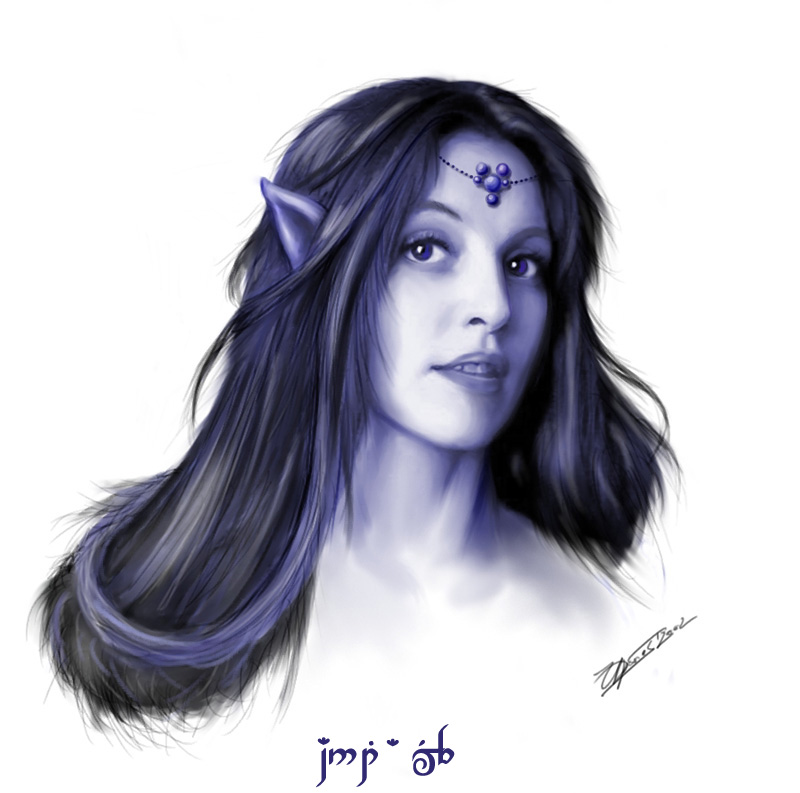
French Military History
Is there a good example of Elven military victory? The most in depth fantasy history out there is the collection of works by Tolkien describing the history of Middle Earth. In almost every case, the elves are great at snatching a defeat out of the jaws of victory.
Much like the French. Lets consider - both have a lovely, lyrical language. Both have a love for and appreciation of all things epicurean. Both favor artistic expression over martial prowess.
So, Elves = French?
Tags: elves, elven history
Subscribe to:
Posts (Atom)